
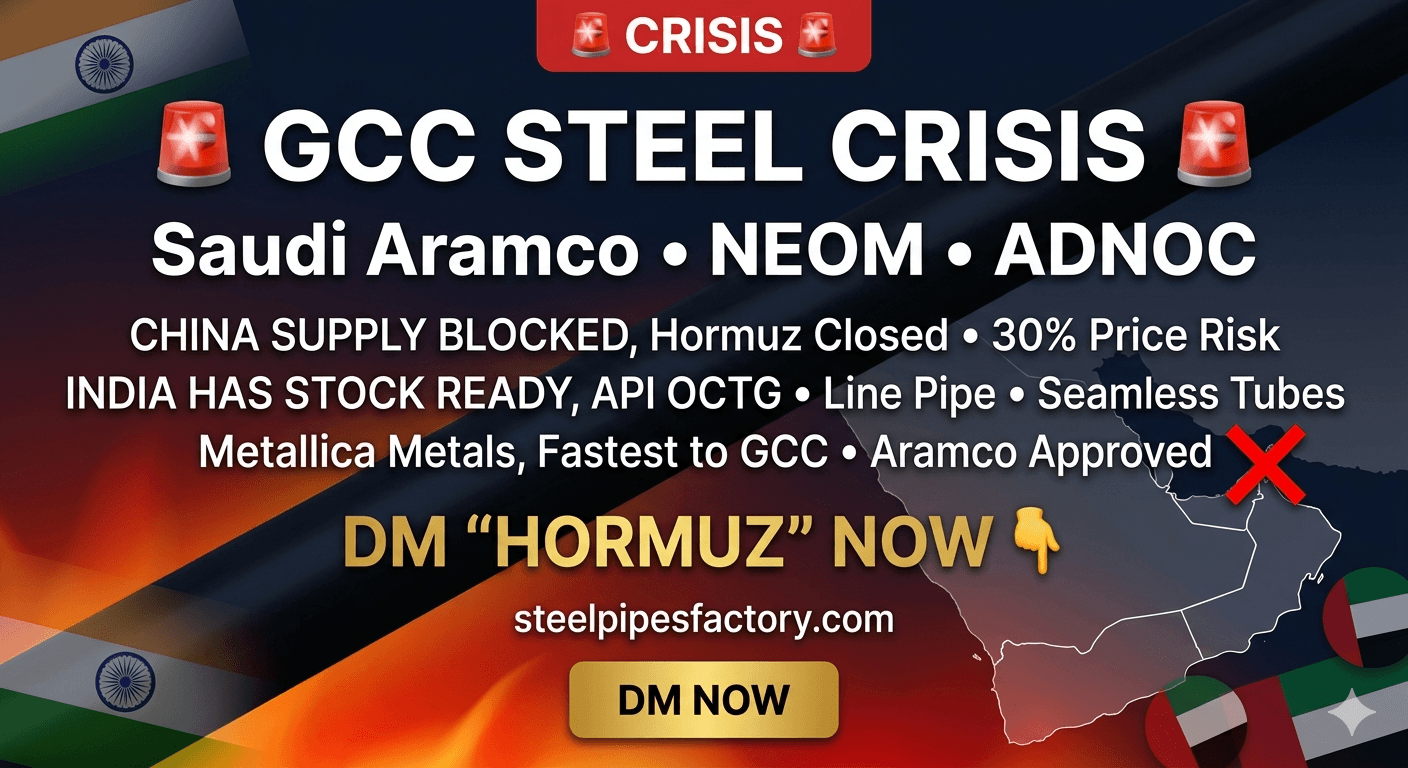
How the Strait of Hormuz Crisis Is Shifting Global Demand for Steel Pipes & Tubes
There’s a quiet storm brewing in global steel—and it’s not just about prices. The escalating tensions around the Strait of Hormuz in 2025–26 have turned a shipping lane into a geopolitical chokepoint, quietly rewriting who supplies steel to the Middle East and how it’s shipped. For buyers of steel pipes and tubes, this isn’t just news—it’s a strategic window.
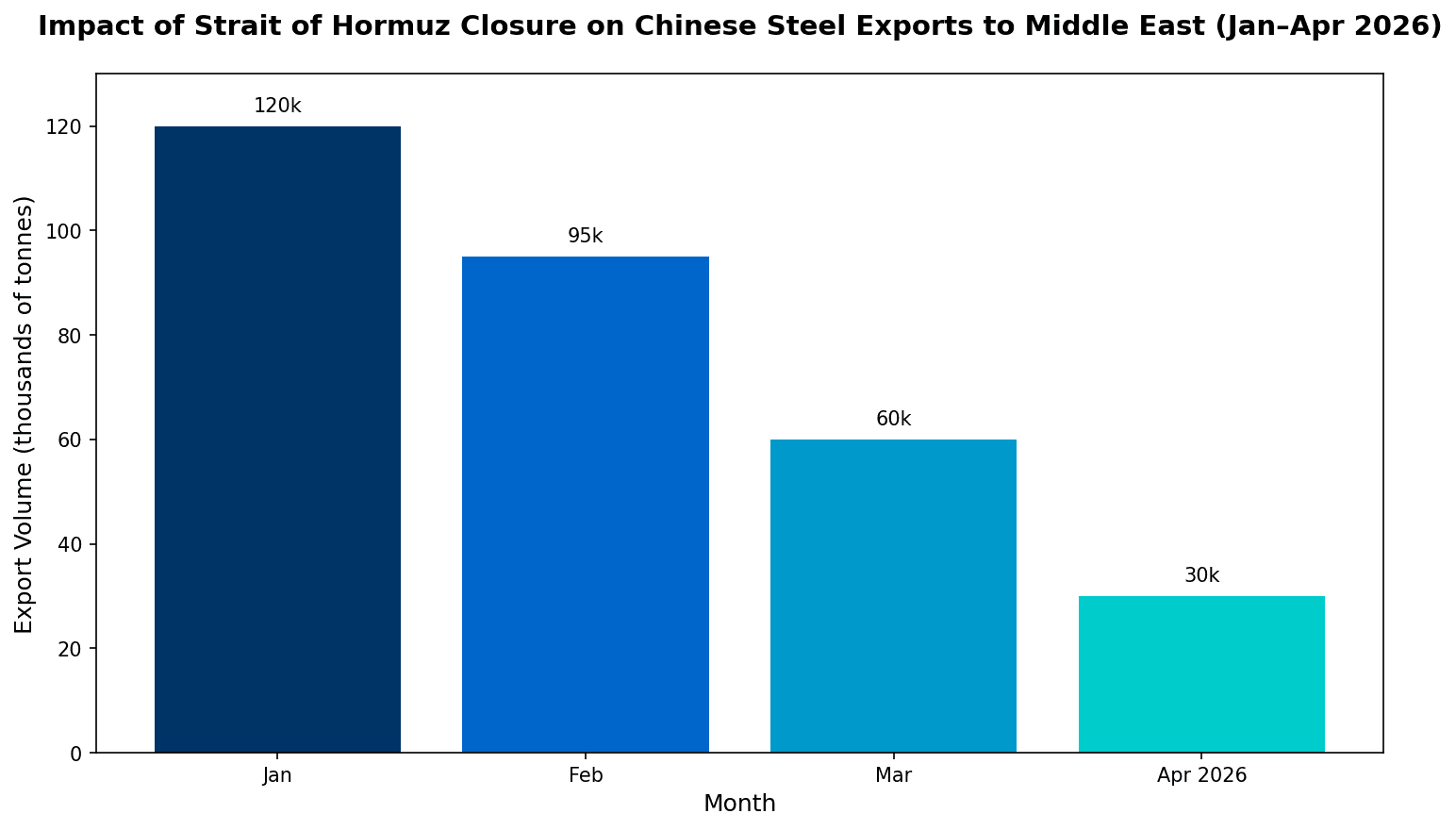
Strait of Hormuz closure impact: Chinese steel exports to Middle East dropped from 120k to 30k tonnes (Jan–Apr 2026).
For decades, the Gulf has relied heavily on Chinese and regional mills for everything from OCTG (oil & gas casing and tubing) to line pipes and structural hollow sections. But with the Strait closed or high‑risk for commercial vessels, those shipments are now stuck, delayed, or being rerouted at much higher costs. That creates a gap—and that gap is where Indian steel pipe manufacturers like Metallica Metals step in.
What Is Happening in the Strait of Hormuz?
- The Strait of Hormuz is the main artery for oil and goods moving in and out of the Persian Gulf. When it gets blocked or unsafe, every cargo ship has to stop, detour, or wait—often for weeks.
- In 2025–26, rising conflict and military activity have effectively halted or frozen many commercial steel shipments through the Strait, especially from China to the Gulf (Saudi Arabia, UAE, Kuwait, Iraq, Oman, etc.).
- Freight rates have spiked and war‑risk insurance has become expensive or unavailable, making many traditional steel‑export routes economically unviable.
This isn’t a temporary hiccup; it’s a supply‑chain shock that’s reshaping how steel moves around the world.
How China’s Steel Exports to the Middle East Are Being Hit
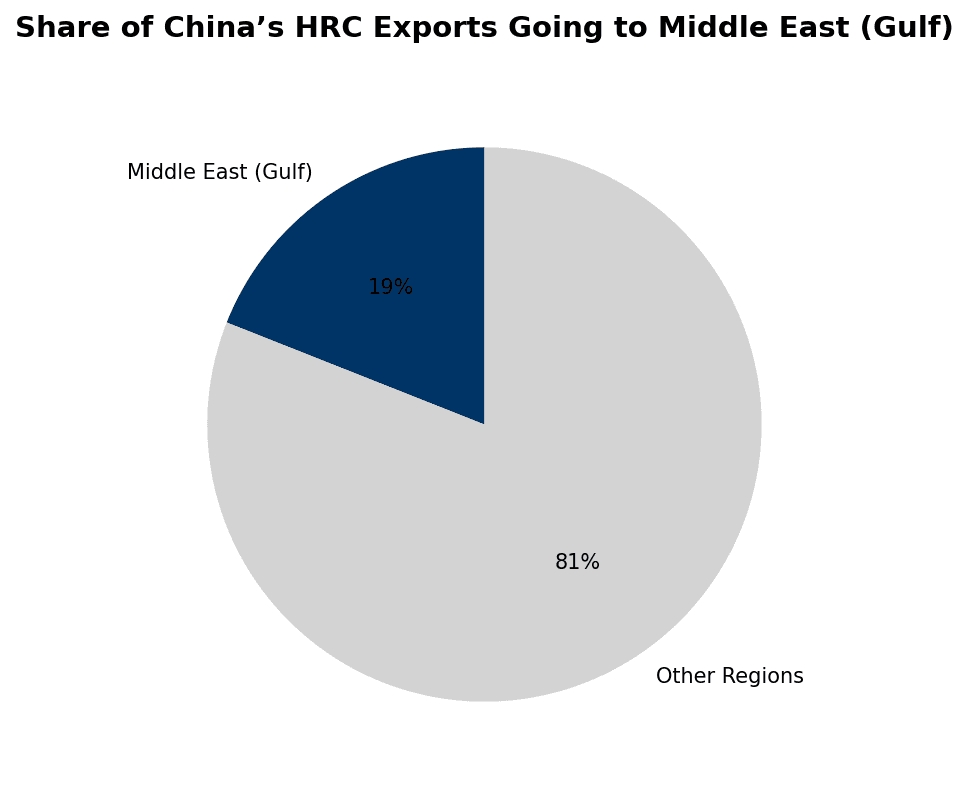
19% of China’s HRC exports head to the Middle East (Gulf). Strait of Hormuz closure hits this segment hard.
- The Middle East used to take about 14% of China’s finished steel exports by volume, and an even higher share of the higher‑value flat‑steel business like hot‑rolled coil (HRC) and coated products.
- For HRC, Gulf countries were absorbing roughly 19% of China’s exports, meaning many of the region’s construction, infrastructure, and industrial projects depended on Chinese steel.
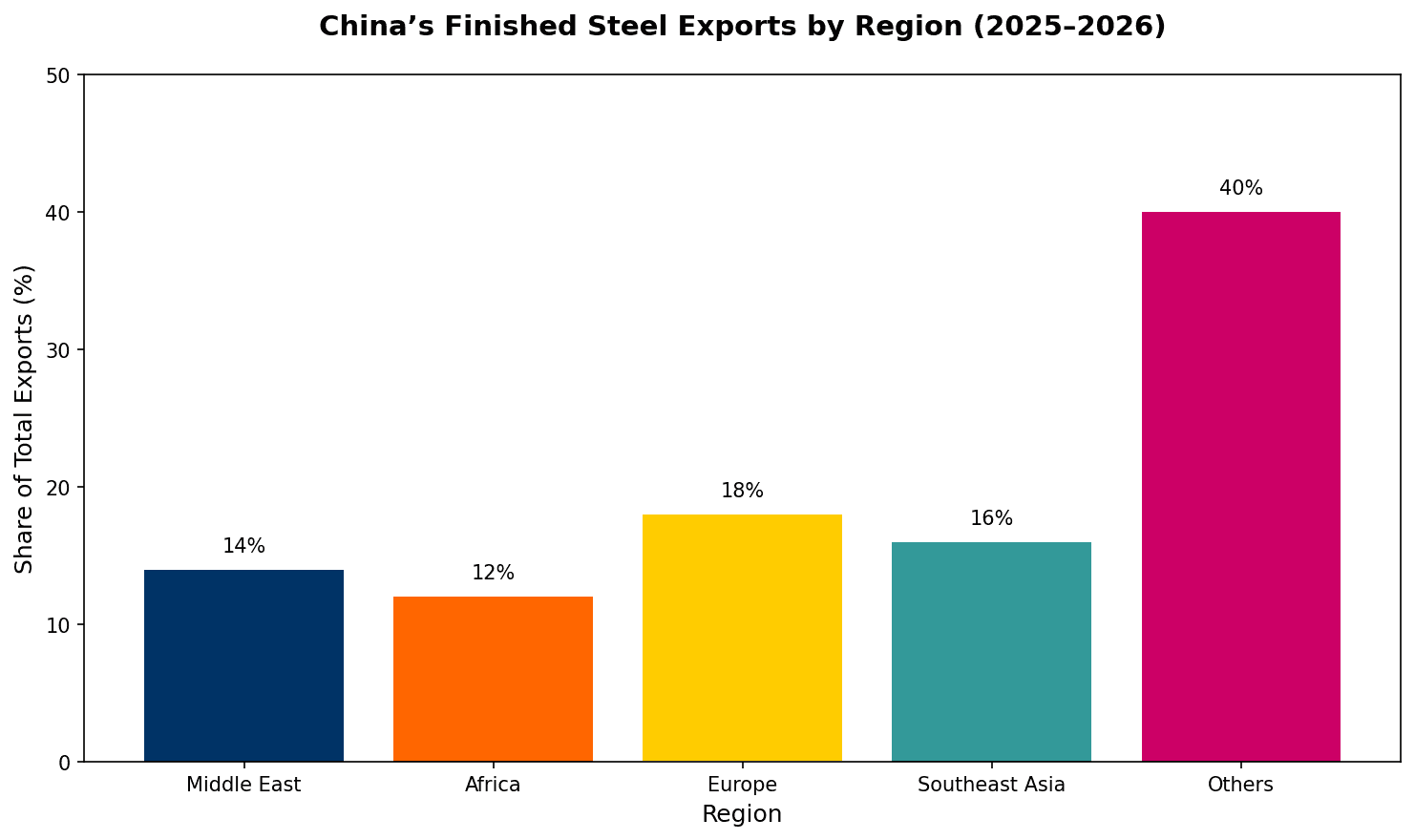
China’s finished steel exports by region (2025–26). Middle East = 14% of total, now at risk from Strait of Hormuz issues.
Now, those shipments are being delayed, rerouted, or cancelled. Buyers are being told:
- “Your order will be late.”
- “We may not be able to insure this cargo.”
- “We may have to charge more for the same product.”
Suddenly, the old “China‑first” strategy no longer feels reliable. And that’s where Indian steel pipe suppliers like Metallica Metals present a safer, smarter alternative.
Why This Is a Huge Opportunity for Indian Steel Pipes & Tubes
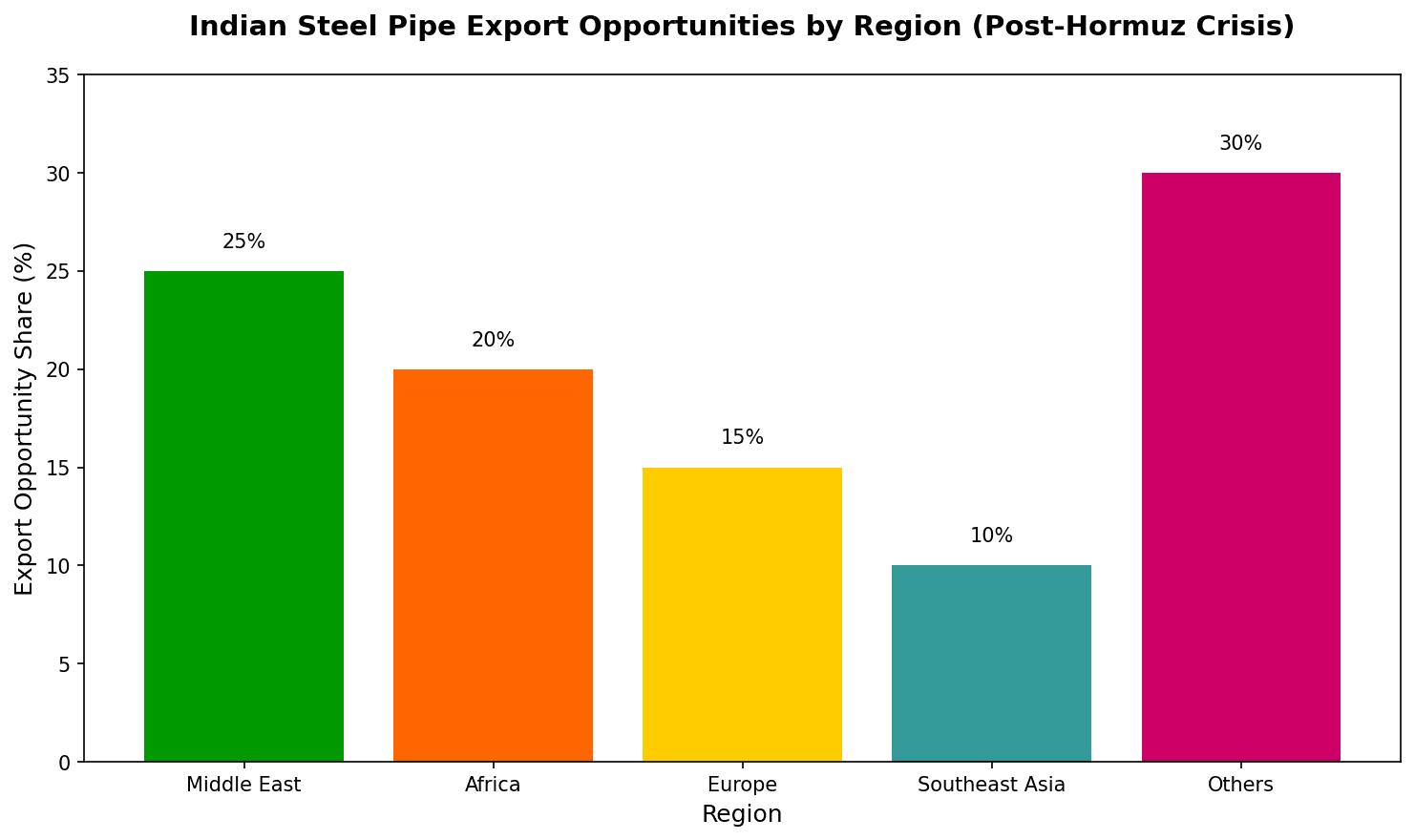
Indian steel pipe export opportunities by region after the Strait of Hormuz crisis. The Middle East, Africa, and Europe show strong potential for Indian mills to step in.
Metallica Metals is already a growing global player in steel pipes and tubes, with strong capacity in:
- Seamless pipes, welded pipes and carbon steel pipes (for oil & gas, power, and infrastructure)
- Stainless steel seamless pipes and stainless steel tubes (for refineries, chemical plants, and high‑corrosion environments)
- API‑grade OCTG and line pipes (for wells and pipelines)
The Strait of Hormuz crisis is accelerating a simple but powerful shift:
- Gulf buyers need to move away from risky, Hormuz‑dependent supply chains.
- Global buyers are looking for “safe‑route” suppliers that can ship via Suez, the Red Sea, or the Cape of Good Hope without getting stuck in a conflict zone.
- Indian mills are increasingly seen as a cost‑effective, stable source with strong logistics from ports like Mundra, Kandla, and Chennai.
If you’re a buyer worried about:
- Project delays
- Contract cancellations
- Price spikes
- Unreliable delivery schedules
then this moment is exactly when you should be exploring Indian steel pipe suppliers.
How Metallica Metals Helps Buyers Turn Crisis Into Opportunity
At Metallica Metals, we don’t just sell steel pipes and tubes—we help buyers navigate uncertainty and turn geopolitical risk into a competitive advantage. Here’s how:
- Reliable, Alternative Supply When China Slows Down
- With Chinese shipments to the Gulf getting blocked or delayed, buyers are scrambling for alternative suppliers outside the conflict zone.
- We offer a ready‑to‑ship pipeline of carbon and stainless steel pipes & tubes with proven experience in Middle‑Eastern and African markets.
- Faster Lead Times and Flexible Logistics
- Unlike mills whose cargo is stuck in the Gulf or rerouted via long detours, we can plan shipments from multiple Indian ports and push material through safer routes.
- This means you can lock in delivery windows with more confidence, reducing project‑delay risk.
- Quality That Matches Global Standards
- Our products are aligned with API, ISO, and NACE standards, so you can replace Gulf‑ or China‑sourced pipes without compromising on quality.
- We also provide third‑party inspections, test certificates, and documentation that help you clear customs and start projects faster.
- Strategic Partnerships, Not Just One‑Off Orders
- Instead of reacting to each crisis, we help buyers build long‑term steel‑supply partnerships with Indian mills.
- Whether you need OCTG, line pipes, hollow sections, or precision tubes, we work with you to create a dual‑sourcing or multi‑country strategy that reduces dependence on any single route or supplier.
How Buyers Can Benefit Right Now
If you’re an EPC contractor, oil & gas company, infrastructure developer, or pipe distributor, here’s what you can do today:
- Diversify your pipe‑source mix: Bring in Indian suppliers like Metallica Metals as a secondary or primary source for critical projects.
- Bring forward orders: If you’re worried about future delays, place advance orders now and lock in current pricing and availability.
- Explore alternative product grades: If certain Chinese or Gulf‑sourced grades are hard to get, our team can help you select equivalent Indian grades that perform just as well or better.
- Negotiate long‑term contracts: Use this window to sign framework agreements with Indian mills that guarantee volumes, pricing, and delivery windows for the next 12–36 months.
In short, this crisis isn’t just a risk—it’s a chance to build a smarter, more resilient supply chain.
Why This Moment Matters More Than You Think
Supply chains are fragile. One chokepoint can ripple through dozens of projects, delays, and lost contracts. The Strait of Hormuz crisis is exposing that fragility in the steel market—and it’s also exposing a window of opportunity for buyers who act fast.
By choosing Indian steel pipes and tubes from partners like Metallica Metals, you’re not just avoiding delays; you’re:
- Reducing geopolitical risk in your projects.
- Securing better‑priced material with stable availability.
- Building relationships with mills that can scale with your business.
Ready to Turn This Opportunity Into Action?
If you’re tired of hearing:
- “Your cargo is stuck.”
- “We don’t know when it will arrive.”
- “Prices went up because of insurance.”
…it’s time to explore a new way of sourcing steel pipes and tubes.
Contact Metallica Metals today to discuss:
- How we can replace or supplement your current Chinese or Gulf‑sourced steel pipes.
- What product grades and sizes are ready for quick dispatch.
- How we can help you lock in supply and pricing before the next market shift.
This isn’t just a blog post—it’s a call to action. The Strait of Hormuz may be blocked, but your projects don’t have to be.


Leave A Comment