
ASTM A312 TP 316/316L Seamless Pipe: Why Procurement Chooses the Molybdenum Edge
As a Procurement Manager or Contractor in critical infrastructure, you know that specifying the right material is a non-negotiable commitment to project longevity and safety. When facing corrosive environments—be it chemical processing, marine applications, or high-heat exchangers—the default choice for decades has been a single standard: ASTM A312 TP 316/316L seamless pipe.
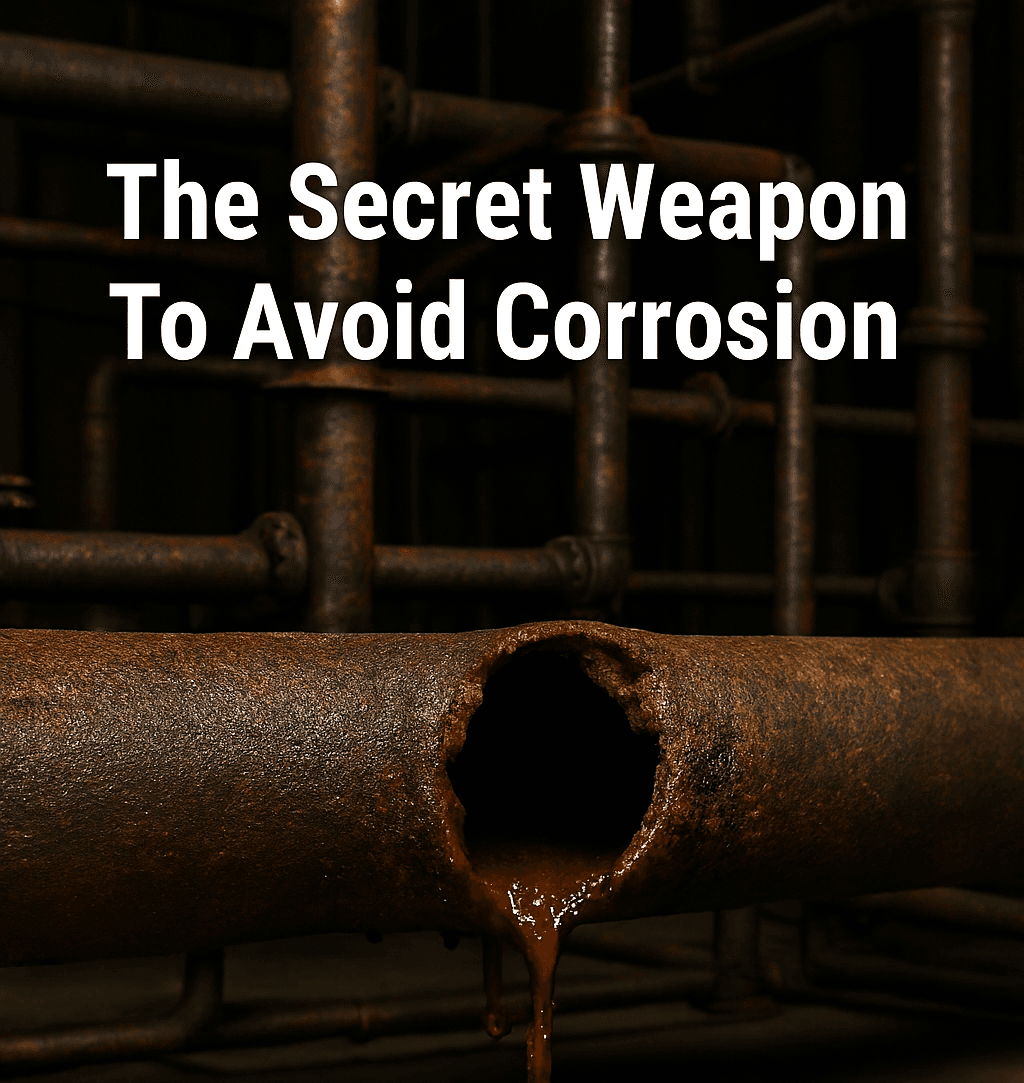
This specification is more than just a set of standards; it is a promise of performance. But what truly sets it apart from other stainless steel grades? The answer lies in a tiny, yet mighty, element: Molybdenum. This additive is the “secret weapon” that gives TP316L its superior resistance against the most aggressive forms of corrosion, including pitting and crevice corrosion, making it a critical differentiator in long-term procurement strategy.
Molybdenum ASTM A312 TP316/316L
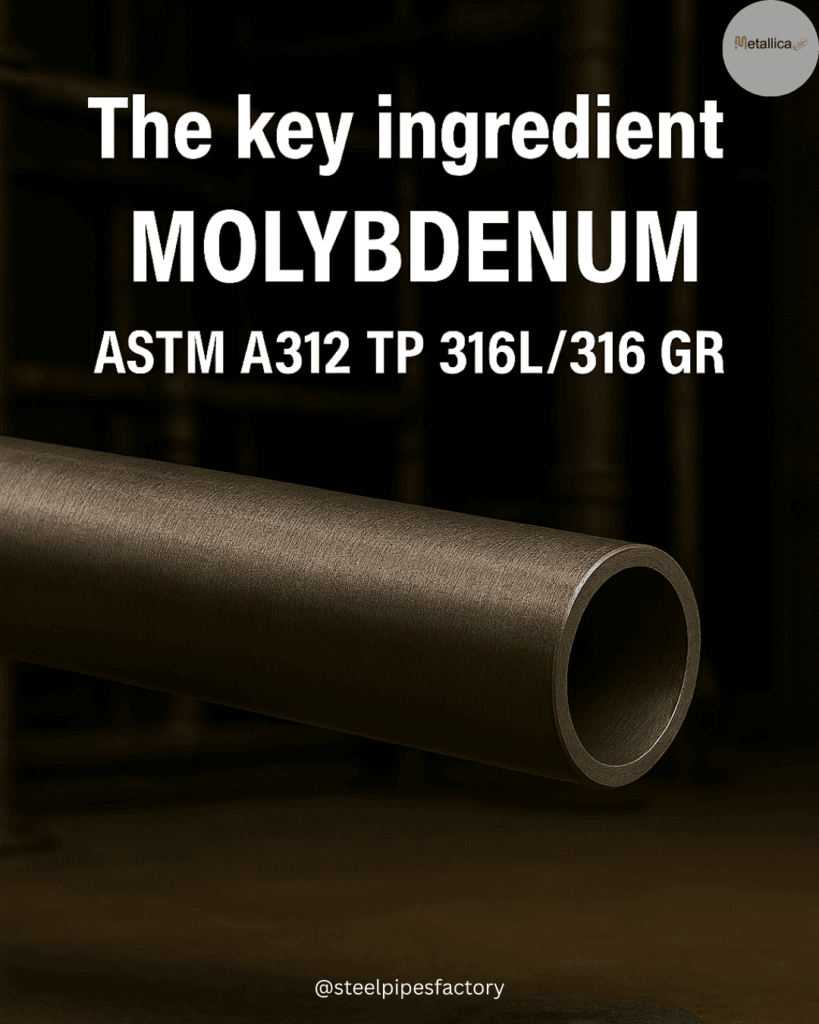
Molybdenum ASTM A312 TP316/316L
This guide is built specifically for your B2B decision-making process. We will cut through the technical jargon to give you the precise information you need to justify your investment, from understanding the core differences between 316 and 316L, to deciphering the key specifications that guarantee material authenticity.
Ready to optimize your material procurement? Request Your Custom TP316L Pipe Quote Today!
The B2B Guide to Seamless Pipe Specifications
316 vs. 316L Stainless Steel Pipes: Understanding the Critical “L”
- Carbon Content: Explain that the “L” denotes Low Carbon (max 0.03%), which is the key feature for avoiding sensitization during welding.
- Sensitization Explained: Carbide precipitation, commonly referred to as sensitization, occurs in austenitic stainless steels when they are exposed to temperatures in the range of approximately 450°C to 850°C, which typically happens in the heat-affected zone (HAZ) during welding.
- At these temperatures, chromium carbides (Cr₂₃C₆) precipitate along the grain boundaries. This process locally depletes chromium from the adjacent areas. Since a minimum of about 12% chromium is required to maintain a stable passive oxide layer, these chromium-depleted zones lose their corrosion resistance.
- As a result, when the welded joint is exposed to a corrosive environment, intergranular corrosion preferentially attacks the grain boundaries in the HAZ, even though the bulk material may appear unaffected.
- Role of Low Carbon Grades (L Grades): Low carbon stainless steels (e.g., 304L, 316L) contain ≤0.03% carbon, which significantly reduces the availability of carbon to form chromium carbides during welding. With insufficient carbon, carbide precipitation is minimized or eliminated, thereby preventing sensitization.
- This ensures that chromium remains in solid solution, maintaining uniform corrosion resistance across the weld metal and HAZ.
Why This Matters to Contractors
- Prevents premature weld failure due to intergranular corrosion
- Eliminates the need for post-weld heat treatment in most cases
- Ensures long-term reliability in corrosive and high-temperature service
Key takeaway:
Using low carbon stainless steel grades is one of the most effective and practical methods to prevent sensitization and intergranular corrosion in welded joints.
### Molybdenum’s Role: The Secret Weapon Against Pitting and Crevice Corrosion
- Technical Explanation: Molybdenum (approx. 2.0% to 3.0%) creates a protective film that is highly resistant to chlorides and sulfuric acids, environments where standard 304 stainless steel would fail rapidly.
- Real-World Impact: Connect this directly to ROI—fewer material failures, reduced maintenance costs, and a longer operational lifecycle for the system.
### Deciphering the ASTM A312 Standard for Seamless Pipes
- Seamless Advantage: Emphasize that the seamless construction eliminates the risk of defects associated with the weld seam, making it the preferred choice for high-pressure, high-temperature, and critical applications.
- Required Testing: List essential tests a quality pipe must pass (hydrostatic test, non-destructive electric test, flattening test, radiographic examination). This builds confidence in the manufacturing process.
### Pricing and Procurement: Optimizing Your 316L Seamless Pipe Price
- Factors Affecting Cost: Discuss raw material cost (Nickel and Moly price volatility), quantity, and the required level of certification (e.g., NACE MR0175 compliance).
- Supplier Vetting: Provide a checklist for assessing potential suppliers (Mill Certification, Traceability, In-stock inventory).
## Final Recommendation: A Strategic Choice for Critical Projects
- Conclusion: Reiterate that choosing ASTM A312 TP 316/316L is a strategic, not just a material, decision. It minimizes risk and maximizes system lifespan.
(Need an immediate quote for a project? Contact our B2B sales team today for certified 316L Seamless Pipes.)






Leave A Comment